
Technology giant Apple has informed its customers in India that it will no longer store their card information on file and will not be accepting payments made by debit cards and credit cards for purchases or subscriptions on the App store or other Apple services. The decision has been taken by the US-based company in view of the Reserve Bank of India's (RBI's) card data storage guidelines, which will kick in from July 1. The deadline for implementing these norms was extended twice.

Taxi booking, shopping and transfer of money will be easy.

Install a security software that has an app advisor function, advises Tinesh Bhasin.

India saw growth of around 213 per cent in the number of real-time payments processed over the past year.

Industry associations and companies in the United States, including the US Chamber of Commerce, Coalition of Services Industries and the iconic bike company Harley Davidson have called on the Donald Trump dispensation to push India to reduce tariffs, non-tariffs, and regulatory barriers to boost American exports.

India will grow at around 7.4 per cent in 2022-23 and continue at the same pace in the next year as well, Union Finance Minister Nirmala Sitharaman said on Friday. Sitharaman said there are risks on the external front and this is not the right time to throw caution to the wind, and also assured exporters of all the necessary support from the government as they face the headwinds. Speaking at the FE Best Bank Awards event here, Sitharaman said global agencies like IMF and the World Bank have taken cognisance of the strengths of the Indian economy by saying that it will be among the fastest growing ones in the next two years.
They straddle many different (non-financial) lines of business with sometimes opaque overarching governance structures.

The transition to UPI-based ATMs will be gradual, and consumers will not immediately switch to using standalone UPI ATMs overnight.
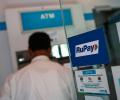
RuPay National Common Mobility Card's offline wallet can be used to make ticket payments in transit, including in metros, cabs, etc, enabling automatic, quick, cashless payments.

The finance ministry (FinMin) has asked Infosys to work on ways to extract and access taxpayers' real-time data faster and accurately as it is crucial for taking decisions on policy changes. While reviewing progress of the income tax portal 2.0, which had faced glitches, the officials also told the Infosys team to increase the scope of pre-filled data in the ITR forms. Senior officials in the ministry held a review meeting last month with the Infosys team and officials of the Central Processing Centre (CPC).

Unified Payments Interface (UPI), the flagship payments platform of the National Payments Corporation of India (NPCI), made a record in volume and value of transactions in July as digital payments rise in the pandemic. UPI processed a record 3.24 billion transactions in July up 15.7 per cent from June when it processed 2.8 billion transactions. In value terms, in July, the platform processed transactions worth Rs 6.06 trillion, up 10.76 per cent from June.

As on June 16, currency in circulation was Rs 15.29 lakh cr, or 86.2% of pre-note ban level

N Sundaresha Subramanian digs deeper into what Catalyst, an Indo-US project, brings to the payments ecosystem.

Going by the RBI directive and the overall narrative, Paytm may have lost the rigour of stress tests, audits and compliance.

Get a new QR code from an alternative provider. PhonePe, Google Pay, Pine Labs, etc are some of the other service providers.

These top two apps account for more than 78 per cent of the UPI market in terms of volume of transaction, and 86 per cent of the market by value of transactions in December.
While it took UPI three years to reach a billion transactions in a month, the next billion came in just a year. Digital payments, especially UPI, saw increased adoption in 2020 due to the Covid-19 pandemic.

Electronic transactions are rising fast, so are cases of payment failure and delayed settlement. One needs to be proactive.

The country has come a long way in the process of financial inclusion, Raghuram Rajan said, but "still has a way to go".

Financial institutions are 300 times more vulnerable to cyberattacks than any other industry.

The digital transformation should not be confined to a small part of the "human race" and its greater benefits will be realised only when digital access becomes "truly inclusive", Prime Minister Narendra Modi said at the G-20 summit on Wednesday. Modi also strongly pitched for a pledge by the G-20 leaders to work for bringing digital transformation into the life of every human being in the next 10 years so that no person is deprived of the benefits of the new technologies. In a session on digital transformation, the prime minister also said that principle of "data for development" will be an integral part of the overall theme of India's upcoming G-20 Presidency.

The Securities and Exchange Board of India (Sebi) has proposed measures mandating daily upstreaming of all investor funds from stockbrokers to clearing corporations (CCs). The step, aimed at reducing risk on client funds, will further deplete brokers' revenues as they will lose interest income with transfers being done daily. At present, stockbrokers convert the surplus funds into bank guarantees (BG) or fixed deposit (FD) receipts which earns them extra income.

An analysis for the first eight months of CY18 shows that the value of RuPay and UPI transactions constitute 65.2 per cent of all transactions done through debit and credit cards, in value terms, across retail outlets by the end of August.

Modi was honoured with the 'Order of Zayed', the UAE's highest civilian award, in 2019 as a mark of appreciation for his efforts to boost bilateral ties between the two nations.

WhatsApp on Wednesday said it expects to facilitate the purchase of "affordable sachet-sized" health insurance through its platform by the end of the year as part of its efforts to provide users in India with greater access to financial solutions. The Facebook-owned company noted that its 'Payments' feature is now available to users across the country (currently up to 20 million users) with support from banking partners - State Bank of India, HDFC, ICICI and Axis Bank.

As it readies for its initial public offering (IPO) later this year, digital payments firm Paytm is honing its strengths to remodel itself from being a payment wallet to becoming a financial services provider, and is working towards narrowing its losses, evident from its most recent Annual Report. Unlike many of its peers, Paytm has started expanding its merchant payment ecosystem. It has realised that though it can take the maximum share of the Unified Payment Interface (UPI) transactions, from a revenue generation point of view it will not have any impact.

Leveraging global capital markets to give muscle to an innate competitive advantage in rapid mass transaction systems will lead to India becoming a petri dish for global enterprises and new-age innovation that it yearns to be.

'The market has picked up for commercial vehicles. We are very close to pre-pandemic levels.'

If bank and service provider are not compliant, pay manually, or give standing instruction linked to bank a/c, suggests Bindisha Sarang.

Addressing the 76th United Nations General Assembly session here, Prime Minister Modi said that today, every sixth person in the world is an Indian.

That's the government's goal for the Unified Payment Interface by March. Are they close? A P Hota, the man at the helm, answers.

ICICI Bank says it blocked all UPI transactions made through PhonePe due to security concerns.

Speaking at a joint press event with Macron, Modi, who is in Paris on a two-day official visit, said a roadmap to strengthen India-France strategic ties over the next 25 years was being prepared with bold and ambitious goals on the anvil.

Walmart-owned digital payments firm PhonePe has decided to halt its proposed acquisition of Goldman Sachs- and Xiaomi-backed ZestMoney, a Bengaluru-based buy now, pay later (BNPL) platform. The deal, which was poised to fetch anywhere between $150-200 million and $300 million, has hit a snag over lapses in due diligence, disagreements over valuation, sustainability of the business, and shareholding structure of ZestMoney, according to people familiar with the matter. The collapse of the deal is also being attributed to a slowdown in the financial technology (fintech) sector in the midst of a funding winter, difficult regulatory environment, and macroeconomic uncertainty, informed other sources.

The US Trade Representative noted that India's average applied tariff rate stood at 17% per cent, the highest of any major world economy.

Investors may have to wait a little longer for Unified Payments Interface (UPI)-based block mechanism in the secondary market even as the market regulator has set the effective launch date as January 1, 2024. Several brokerage firms said they may take a few months more to implement it. Investors will be able to register for this facility only if the stock broker has opted for the UPI block facility.

The venture is applying to the Reserve Bank of India for approvals.

'The new Bill introduces no policy or rate changes, leaving financial planning strategies largely unaffected.'
'The considerations for choosing between the old and new tax regimes remain essentially unchanged.'

American online major Amazon seems to be almost doubling its India investment going by the company's recent announcement during Prime Minister Narendra Modi's state visit to the US. From the time the Seattle-headquartered company started its India journey in 2013, its investment into the country is pegged at $11 billion or roughly $1.1 billion a year. By committing a fresh round of $15 billion by 2030, the Jeff Bezos-founded company's investment would go up to more than $2 billion a year over the next seven years.
